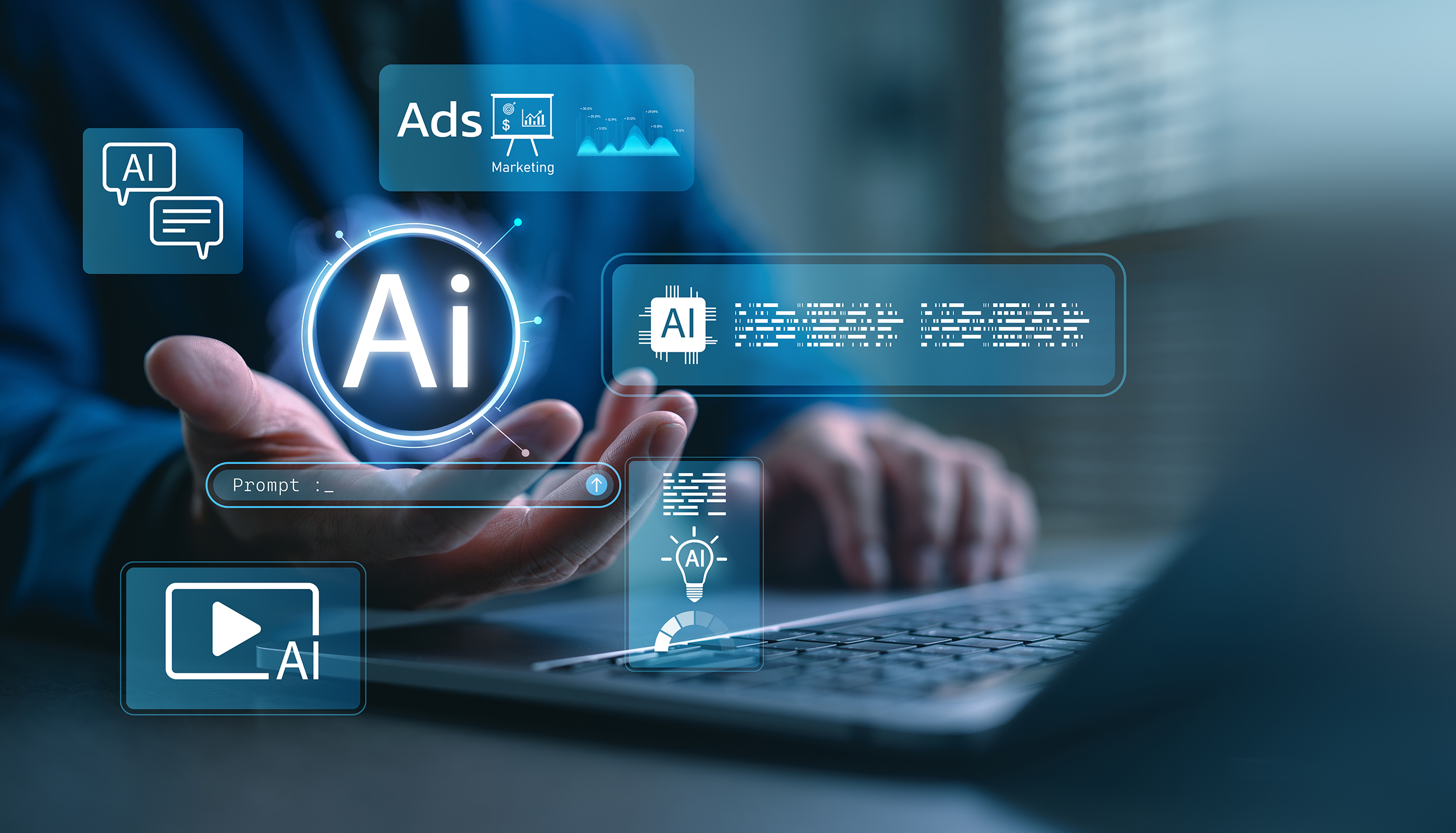
AI has officially entered the chat — and the branding world is feeling it. Tools like ChatGPT and DALL·E kicked the doors open, and now every week there’s a shiny new app claiming to “revolutionize” logos, brand strategy, content creation, even consumer psychology.
Some of it’s helpful.
Some of it’s chaos.
All of it is changing how creatives work.
But instead of asking “Will AI replace us?” the real question is:
How do we use AI to make the work better without losing the soul of the brand?
Let’s break it down.
PART 1: The AI Tool Circus (a.k.a. Stuff That Exists Now)
The market is drowning in AI tools right now. You’ve seen them:
- Color palette generators
- Logo-in-5-seconds apps
- Deck builders that spit out entire presentations
- “Emotional analysis” tools promising to decode consumer feelings
They sound impressive until you see the results — usually some combination of generic, repetitive, and missing the entire point of what a brand is. AI is great at remixing trends; it’s terrible at understanding the heart of a company.
That’s the danger zone:
A world where brands all start looking and sounding the same.
But here’s the twist:
That problem isn’t AI’s fault.
It’s what happens when you use AI without a human steering.
PART 2: Where AI Actually Helps (Like… Really Helps)
AI isn’t useless. It’s actually kind of incredible when you put it in the right role.
1. Smarter Strategy, Faster
AI can instantly sift through data that would take humans weeks. Small teams now have access to insights that used to require expensive research partners.
- Market trends
- Consumer behavior
- Brand performance patterns
And while predictive analytics isn’t a crystal ball, it can spotlight interesting opportunities early.
2. Creative Kickstarts
Creativity often starts messy. AI thrives in messy.
Need 200 half-bad ideas to find one great one?
AI is your chaos engine.
It can help you break out of ruts, explore unexpected directions, and generate rough inspiration you can shape into something meaningful.
3. Visual Magic & Quick Drafting
This is where AI is exploding fast.
- Gen-fill for fixing or expanding images
- Concept mockups for clients
- Early-stage renderings
- Environment placement for brand assets
- “Show me what this could look like” moments
It won’t replace real design — but it absolutely speeds up exploration.
4. Editing Without the Ego
AI is the perfect proofreader because it doesn’t get offended when you ignore its suggestions.
Tone, clarity, consistency — it’ll keep you in line.
PART 3: The Real Future — Humans + Machines, Not One or the Other
AI isn’t going anywhere. Every disruptive tech eventually becomes part of everyday work, and we’re watching that happen in real time.
But here’s the truth:
Brands aren’t built on perfect color palettes or flawless logos.
They’re built on meaning, emotion, personality, and taste.
AI doesn’t have taste.
Humans do.
At Greybull Studio, we treat AI the way great chefs treat knives — an extension of the hand, not the brain. It sharpens the process, speeds things up, and opens creative doors, but it doesn’t decide what something should feel like. That’s still human territory.
We use AI to:
- Proof faster
- Explore ideas wider
- Visualize concepts sooner
- Push our own thinking
- Support clients where generative imagery actually fits the strategy
But the vision, story, and emotional architecture of a brand?
That stays human.
PART 4: So… Should Creatives Be Worried?
Honestly?
No.
Creatives who rely on templates should be nervous.
Creatives who rely on imagination will be fine.
The future of branding belongs to teams who:
- Use AI for its speed
- Use humans for their soul
- And blend the two into something smarter, sharper, and more intentional
This isn’t a takeover.
It’s a collaboration.
And the brands that embrace both sides are going to create work that hits harder, moves faster, and feels more alive than anything an algorithm can spit out.